What steps are involved in creating a custom jewellery design?
Creating a custom jewellery design usually involves an initial consultation, developing and approving a design, selecting suitable materials, producing the piece, and carrying out final quality checks. Your jeweller will guide you through each stage, from discussing your ideas and budget to confirming the finished piece meets the agreed design.
Creating a custom jewellery design is a structured process that takes an initial idea through consultation, design development, material selection, skilled production and final approval. At each stage, you should understand what is being proposed, what it will cost and which decisions require your approval before work progresses.
The exact process can vary according to the type of jewellery, the complexity of the design and whether existing pieces or gemstones are being incorporated. In general, the main stages are as follows:
You may bring photographs, sketches, heirloom jewellery or examples of styles you like. These references help establish the design direction, but they are not a substitute for a professional assessment of proportion, wearability and construction.
If you are supplying an existing stone or asking for an heirloom piece to be remodelled, it should be examined first. The jeweller needs to check its condition, measurements and suitability for the proposed design. Any limitations or risks should be explained before the stone or jewellery is altered.
During production, the jeweller may identify a technical issue that was not apparent in the initial concept, such as insufficient clearance, a vulnerable setting or a need to adjust proportions. Any significant change should be discussed and agreed before it affects the finished design.
At handover, you should receive guidance on wearing, cleaning and storing the jewellery. Keep any care information and documentation safely, particularly where the piece includes valuable gemstones or has been made from an existing item. If a minor adjustment is needed after you have worn it, contact the jeweller promptly rather than attempting to alter it yourself.
Good communication is important throughout the process. A custom design should not move from concept to production until you are satisfied with the agreed details, and the finished jewellery should be checked against that specification rather than judged only by its appearance. Professional aftercare, including cleaning, inspections, repairs, resizing, remodelling and valuation where appropriate, can then help maintain the piece as it is worn over time.
Creating a custom jewellery design involves turning your requirements into an agreed specification before skilled production begins. Your jeweller will discuss the intended use, style, dimensions, gemstones, precious metal, budget and timescale, then develop a design that can be reviewed and refined.
Approval is an important stage because changes are usually easier before making starts. Check the proposed proportions, setting, band or chain profile, finish and comfort, as well as the quotation and materials. If you are providing an heirloom piece or gemstone, it should be assessed for condition and suitability before it is incorporated.
Once the design is approved, the jeweller crafts and assembles the piece, secures the gemstones and applies the agreed finish. A final inspection checks the settings, edges, dimensions, fit and overall finish before handover, when you can also receive guidance on care and future aftercare.
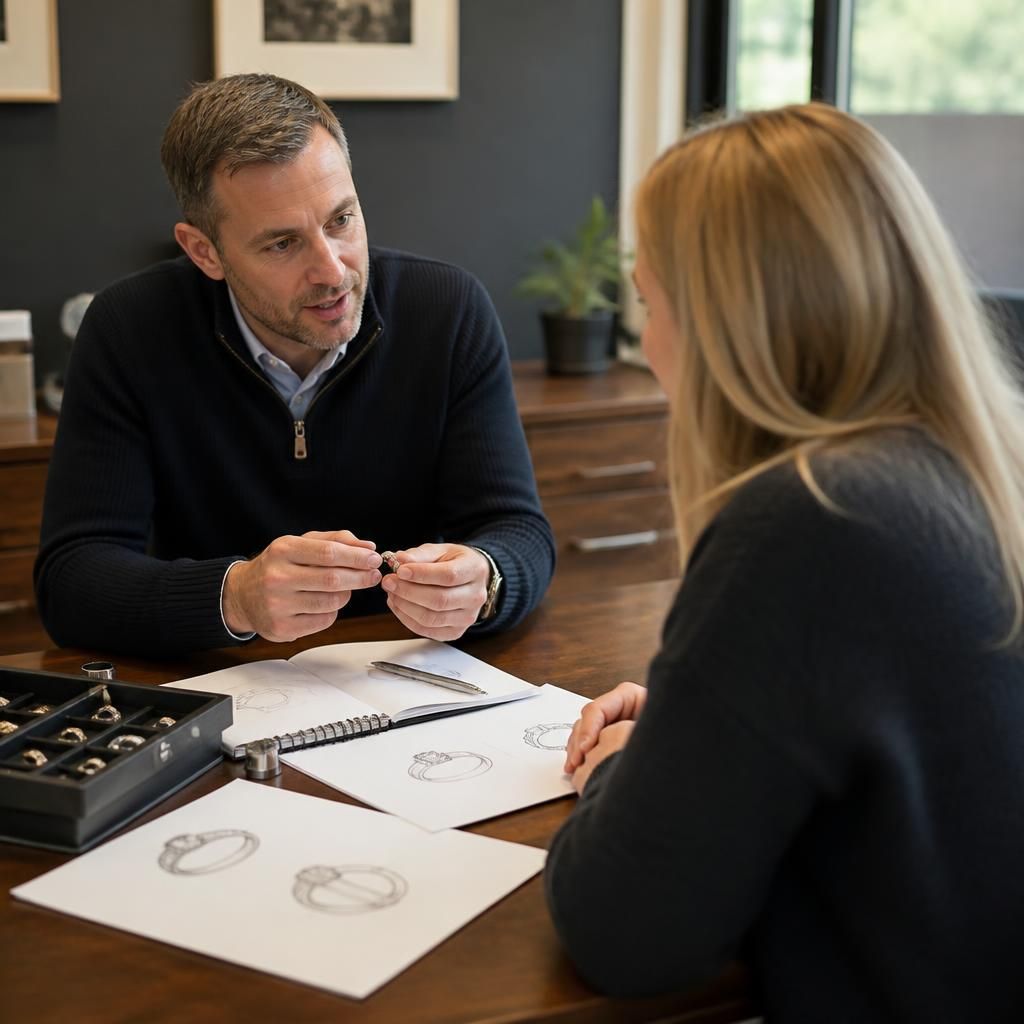
- Design development Your jeweller turns the brief into a workable concept. Depending on the project, this may involve hand-drawn sketches, digital images, technical drawings or computer-aided design. The design should show the overall form, setting style, gemstone arrangement and important proportions.
Discuss Your Custom Jewellery Design
Discuss your custom jewellery design with Steven Charles Quance to review your ideas, materials, budget and the practical details of creating your piece.