
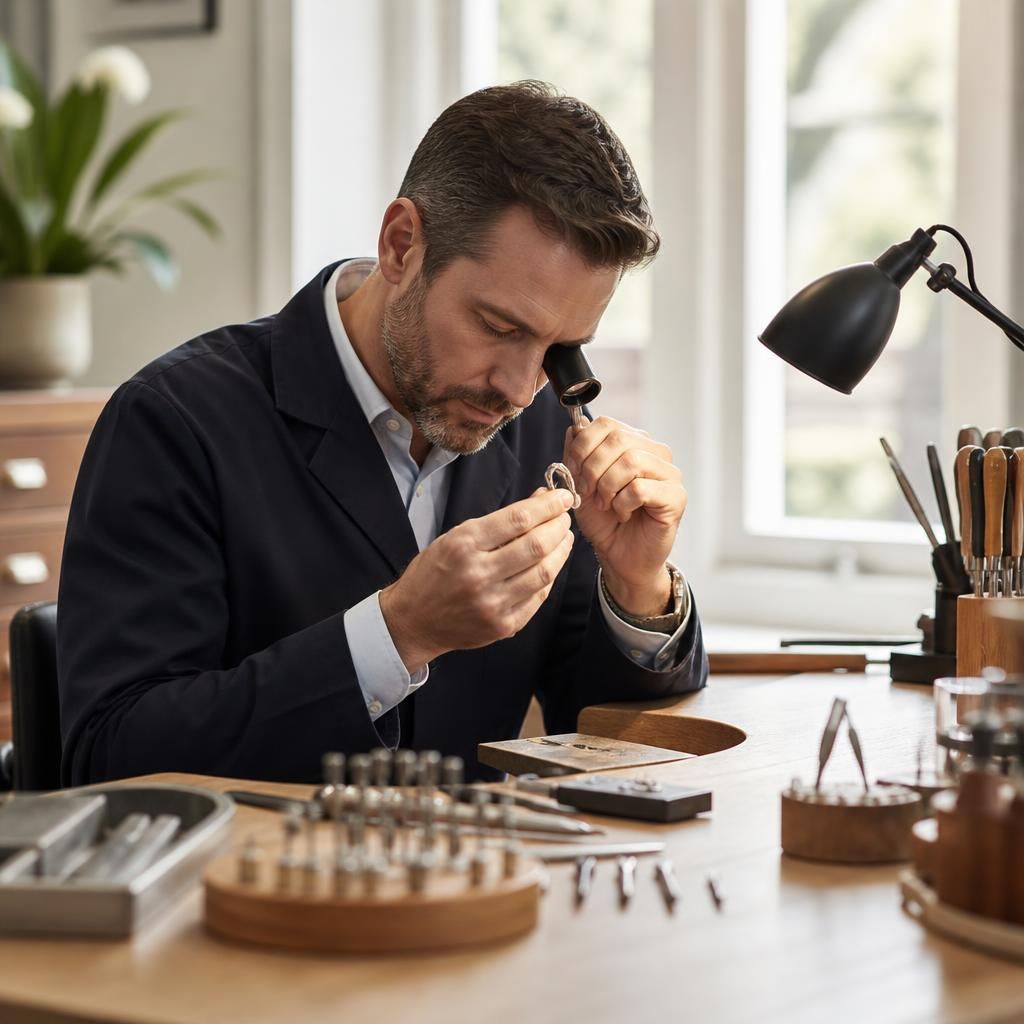
What are the advantages of opting for bespoke versus generic jewellery repair services?
Bespoke jewellery repair is tailored to the piece’s materials, construction, finish and sentimental value, whereas generic repair services typically apply standard methods. This specialist approach can preserve original details more accurately, provide a more discreet finish and reduce the risk of compromising the jewellery’s integrity or future wearability.
Bespoke jewellery repair is usually the better choice for valuable, unusual or sentimental pieces because the work is planned around the item’s exact materials, construction, condition and history. Rather than applying a standard repair method, a specialist jeweller assesses how the piece was made and selects techniques that protect its appearance, strength and future wearability. Generic repair services can be suitable for straightforward tasks, but they may not provide the same level of individual care or control over the finished result.
The main advantages of bespoke repair include:
Generic repair services are not necessarily inappropriate. They may be practical for simple jobs such as replacing a conventional clasp, repairing a plain chain or carrying out routine cleaning and polishing, provided the work is completed by a competent professional. The concern arises when a standard process is used for a piece that requires a detailed understanding of its setting, metal, age, construction or personal significance.
There can also be a difference in how the repair is evaluated. A generic service may focus primarily on whether the item is wearable again. Bespoke repair considers function alongside visual integration, structural integrity and the preservation of original features. For a high-value or sentimental piece, that broader assessment is often more important than choosing the lowest initial estimate.
Before authorising work, ask what has caused the damage, which materials and techniques will be used, whether stones or other components need to be removed, and how the original finish or engraving will be protected. It is also sensible to establish whether the proposed price includes cleaning, polishing, setting checks or any necessary follow-up adjustments. A reputable jeweller should explain when a repair cannot be made completely invisible or when replacement is safer than attempting to preserve a weakened component.
At Steven Charles Quance, a bespoke repair assessment is particularly appropriate for custom-made jewellery, engagement and wedding rings, inherited pieces, intricate settings and items with meaningful engravings or unusual construction. The advantage is not simply a more personal service; it is the technical decision-making behind the work. By matching the repair to the jewellery rather than forcing the jewellery into a generic process, the finished piece has a better chance of retaining its original appearance, strength and significance.
Bespoke jewellery repair is planned around the individual piece, rather than applying a standard method. This is particularly important for engraved, inherited or custom-made jewellery, where preserving the original character matters as much as restoring its function.
Before work begins, the jeweller can assess the metal, setting, surface finish and personal details such as hallmarks, milgrain edges or engraving. Repair techniques and materials can then be selected to protect these features, match the existing colour and texture, and reduce the risk of an obvious join or altered proportion. The result should be structurally sound while remaining consistent with the design you already value.
- A repair tailored to the jewellery’s construction. Handmade and designer pieces can contain unusual settings, concealed joins, fine wirework, mixed metals or complex moving parts. A bespoke approach takes these features into account before any work begins, reducing the risk of weakening a nearby area or altering the way the piece functions.
- Better preservation of original character. The aim is not simply to make damage disappear. The repair should respect the original proportions, surface finish, setting style and design details. This is particularly important where a piece has been made to a custom design or contains features that are no longer commonly produced.
- More discreet results. A specialist can match the replacement metal, profile, texture, colour and finish more closely. Solder joints, rebuilt claws, resized sections and replacement components can then be blended into the existing design. A generic repair may restore basic function while leaving a visible difference in colour, thickness or polish.
- Careful treatment of personal details. Engravings, hallmarks, maker’s marks, milgrain edges, unusual motifs and inherited design features can be lost or distorted if a repair is approached too aggressively. Bespoke work allows these details to be identified at the assessment stage and protected wherever technically possible.
- Appropriate treatment of precious metals. Gold alloys, platinum, silver and mixed-metal jewellery do not all respond to repair in the same way. The correct solder, laser technique, heat control, filing and polishing method depend on the metal and the area being repaired. Matching the material properly can help prevent brittle joints, discolouration or an obvious change in surface appearance.
- Consideration of future wear. A repair can be adapted to how and where the jewellery is worn. A regularly worn wedding ring may require reinforcement in a high-wear area, while a fine pendant may need attention to its bail or chain connection. The jeweller can also advise whether resizing, strengthening, replacing a component or changing the design would provide a more durable result.
- Better continuity for remodelling and restoration. If a damaged item is part of a wider set or is being updated using existing stones, a bespoke service can consider the whole design rather than treating one component in isolation. This helps maintain balance between matching earrings, a ring and its associated pieces, or preserve usable elements from an inherited item.
- Clearer responsibility and advice. Bespoke work normally begins with a documented assessment, a discussion of the available options and an explanation of any limitations. You can make an informed decision about whether to repair, restore, remodel or replace a component, rather than accepting an unspecified standard treatment.
Arrange a Bespoke Jewellery Repair Assessment
Arrange a bespoke jewellery repair assessment with Steven Charles Quance to discuss the damage, suitable techniques and how your piece’s original details can be preserved.